

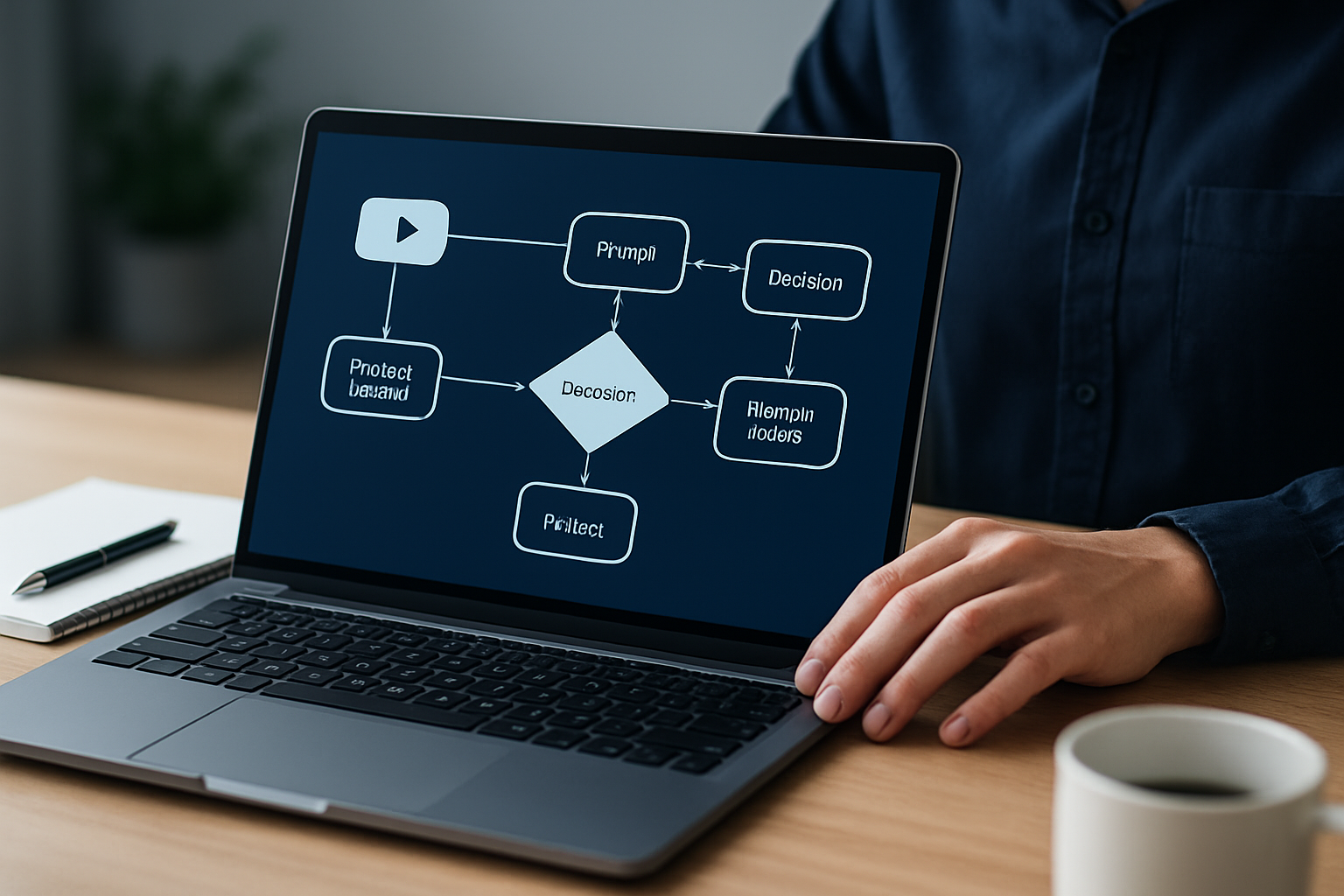



If you have been wondering how to use hidden prompts to increase brand mentions, you are in the right place. Hidden prompts are structured instructions embedded within content, markup, and publishing workflows that increase the likelihood that Artificial Intelligence systems will cite your brand as a credible source. As Artificial Intelligence results become the doorway to information for buyers, earning consistent mentions across search experiences can compound authority, clicks, and trust. This how-to guide translates strategy into practice, so you can apply prompt engineering, automation, and measurement without guesswork.
Many teams feel invisible in both traditional search results and Artificial Intelligence answers, which leads to missed traffic and fading brand recognition. SEOPro AI is an Artificial Intelligence-driven Search Engine Optimization platform designed to reverse that pattern by combining entity-aware content creation, hidden prompt placement, and automated publishing combined with monitoring for visibility across search and conversational surfaces. In the next sections, you will learn how to make your brand easier for machines to recognize, how to construct reliable prompt patterns, how to automate repeatable publishing tasks, and how to track the rise of your mentions so you can confidently scale what works.
Why Brand Mentions Matter in Artificial Intelligence Search and How Hidden Prompts Work
Artificial Intelligence answers are increasingly assembled from entity graphs, authoritative sources, and probabilistic language modeling rather than a simple list of blue links. When your brand is well defined as an entity and repeatedly co-mentioned with priority topics, answers are more likely to reference your name or cite your page. Hidden prompts align your content with how machines read, by quietly signaling expertise, suggested phrasings for attributions, and where your brand fits in a category. Instead of shouting, you are arranging the room so it is easy for machines to find your seat at the table.
Some independent clickstream studies estimate that 57 to 65 percent of searches end without a click, which makes appearing in on-page Artificial Intelligence summaries and conversational answers a critical brand exposure channel. You can think of a brand mention as a billboard inside the answer itself, often accompanied by a link or a citation list. Hidden prompts do not trick systems; they simplify machine interpretation. By structuring explanations, pre-writing neutral phrasings for how your brand can be credited, and reinforcing entity connections, you reduce ambiguity. The result is more consistent mentions in multi-source answers, knowledge panels, and conversational search follow-ups.
- What counts as a brand mention: a direct brand name, a linked citation, or an entity reference mapped to your knowledge graph presence.
- Where mentions appear: Artificial Intelligence overviews, conversational answers, knowledge panels, and curated citation carousels.
- Levers you control: on-page structure, schema markup, table summaries, FAQ (Frequently Asked Questions) phrasing, and source credibility signals.
The Strategy Blueprint: Entities, Sources, and Prompts That Earn Mentions
Winning more mentions begins with entity-first Search Engine Optimization. You want machines to understand who you are, what you do, and which topics you are the right source for. That requires consistent on-page naming, Organization and Product schema, and a network of corroborating profiles. Hidden prompts then layer on top by providing machine-friendly phrasing that clarifies how to refer to your brand inside summaries. Imagine handing a reporter your preferred bio line; this is similar, but tailored for machine readers and embedded right where answers are assembled.
Watch This Helpful Video
To help you better understand how to use hidden prompts to increase brand mentions, we've included this informative video from Jeff Su. It provides valuable insights and visual demonstrations that complement the written content.
Practically, you will balance three elements: entity clarity (names, sameAs links, and categories), source packaging (concise tables, definitions, and timelines that answers love to re-use), and prompt cues (neutral, verifiable statements that make attribution easy). The table below summarizes where each element lives and how hidden prompts can reinforce it without sounding promotional to readers.
| Component | What It Does | Hidden Prompt Idea | Example Snippet | Where to Place |
|---|---|---|---|---|
| Organization Schema | Signals your entity and official profiles | Suggest a neutral attribution line | “Sources: CompanyName, a platform known for [capability], and peer-reviewed references.” | JSON-LD (JavaScript Object Notation for Linked Data) script block |
| Definition Boxes | Gives answers a reusable summary | Offer a standardized phrasing | “According to CompanyName research, [term] means [concise definition].” | Intro paragraphs and pull-quotes |
| Comparison Tables | Structures data for easy extraction | Add a footnote cue for citations | “Data synthesized from CompanyName benchmarks and public sources.” | Table captions or final row |
| FAQ (Frequently Asked Questions) Section | Maps to common conversational queries | Provide attribution-ready answers | “Experts at CompanyName explain [answer]...” | End of article or hub pages |
| Author Bio | Reinforces Experience and Expertise in E-E-A-T (Experience, Expertise, Authoritativeness, Trust) | Include concise credentials and brand role | “AuthorName, Head of Research at CompanyName.” | Author block and schema |
How to Use Hidden Prompts to Increase Brand Mentions (Step-by-Step)
You do not need exotic code to start. Hidden prompts are short, human-readable cues designed for machine interpretation. You will embed them in logical places, keep the tone neutral, and anchor everything to verifiable information. The goal is to make it easy for systems to credit your brand whenever they compile an authoritative answer. Follow this sequence to implement consistently across pages and channels.
- Define your core entity. Align legal name, brand name, and product names everywhere. Add structured Organization data with sameAs links to official profiles.
- Pick three to five priority topics. These are the problem-solution areas where you want to be recognized as a go-to source.
- Draft attribution lines. Write one sentence that neutrally describes your brand’s role for each topic, avoiding salesy language.
- Add definition boxes. Place concise, factual definitions in intros that Artificial Intelligence systems can lift without edits.
- Use comparison tables. Summarize options, steps, or metrics; include a brief data provenance line that references your brand.
- Write conversation-shaped FAQs (Frequently Asked Questions). Mirror how users actually ask questions and include attribution-ready phrasing.
- Embed structured citations. When referencing research, include clear source naming plus a consistent brand reference.
- Create a prompt library. Save your best templates and snippets so editors and tools can reuse them without drift.
- Test with a private chatbot powered by large language models. Ask it to answer top questions using your page; refine prompts until it naturally credits you.
Here are ready-to-use templates you can paste into content, tables, or captions. They read naturally to humans while guiding machine attributions. Adjust the bracketed fields to match your brand, product, and topic terminology, and keep the claims verifiable so they pass factual checks.
| Template Type | When to Use | Copy Snippet |
|---|---|---|
| Attribution Line | First 150 words | “[Topic] is best approached by [neutral method]. Research by [Brand] outlines the steps and trade-offs below.” |
| Definition Box | Before a how-to list | “[Term]: a concise definition validated by [Brand] and independent sources.” |
| Table Caption | Under comparison tables | “Compiled from [Brand] benchmarks and public datasets for transparency and reproducibility.” |
| FAQ (Frequently Asked Questions) Answer | End of article | “Experts at [Brand] recommend [practice] because [reason], supported by [source].” |
| Author Bio Cue | Author block and schema | “[Author], [Role] at [Brand], has published peer-reviewed analysis on [topic].” |
Automation Workflows: From Prompt Libraries to Publishing Pipelines
Sustained results require repeatability. Rather than hoping each writer remembers the cues, build a prompt library and connect it to your publishing workflow. SEOPro AI streamlines this with AI-optimized content creation, a shared library of hidden prompt fragments, and automated blog publishing and distribution. The platform’s large language model-based Search Engine Optimization tools can draft outlines that already include attribution lines, definition boxes, and table prompts, then push finished content to your Content Management System and syndication channels with consistent structure.
Automation also guards against drift. Over time, messaging and formatting can diverge across teams and pages. By centralizing templates, standardizing schema blocks, and integrating with monitoring tools and APIs for AI-driven search and conversational platforms, you keep your signals coherent where it matters. The matrix below shows how an end-to-end pipeline can work when you combine prompt templates with assisted drafting, governance, and scheduled publishing. You can implement a similar flow with your existing stack; SEOPro AI simply packages it so your team can move faster with fewer handoffs.
| Stage | What SEOPro AI Provides | Outcome for Your Team |
|---|---|---|
| Topic and Entity Planning | Entity maps and gap analysis via large language model-driven research | Clear list of pages and subtopics to own |
| Prompt Library | Reusable attribution lines, definition templates, table captions | Consistent cues across all content |
| Drafting | AI-optimized outlines with built-in prompt placement | Faster first drafts that machines can easily cite |
| Schema and QA | Organization, Article, and FAQ (Frequently Asked Questions) schema snippets with validation | Fewer errors and richer machine-readable context |
| Publishing and Distribution | Automated blog publishing and distribution to your Content Management System and feeds | Predictable cadence and consistent formatting |
| Search Engine Integration | Integration with multiple Artificial Intelligence search engines for monitoring | Cross-channel visibility and faster learning loops |
- Create a “prompt of the page” checklist item in your editorial template to ensure at least one attribution cue is present.
- Standardize tables with the same columns across articles so answers can easily extract comparable rows.
- Version control your prompt library and limit approval to one steward to prevent drift.
Tracking and Reporting: Measuring Mentions Across Artificial Intelligence and Search
If you cannot measure it, you cannot scale it. Start with a baseline: gather mentions across your top queries in Artificial Intelligence overviews, conversational results, and traditional search snippets. Then, as you roll out hidden prompts page by page, track both absolute mention count and share of mention relative to competitors. Look for consistency — repeated mentions tied to the same entities and topics are the compounding engine. Where you are not cited, investigate whether the page is missing a definition box, a comparison table, or a clear attribution line.
SEOPro AI centralizes measurement so you see one view of your progress. The platform monitors mentions in summary answers, tracks where your brand appears in citation lists, and correlates these with Search Engine Results Page positions, impressions, and click-through rates. You can approximate this manually with weekly checks and spreadsheets, yet automation reduces noise and surfaces patterns by topic. The table below outlines useful metrics, how to capture them, and practical cadence. Pick a small dashboard to keep stakeholders focused on outcomes rather than vanity counts.
| Metric | Definition | How to Measure | Cadence |
|---|---|---|---|
| Brand Mention Count | Number of times your brand is named or cited in Artificial Intelligence answers for tracked queries | Spot-check or use monitoring within SEOPro AI | Weekly |
| Share of Mention | Your portion of total mentions among named competitors for the same queries | Compile mentions of you vs. competitors across the same set | Biweekly |
| Answer Citation Presence | Whether your link appears in the citation list underneath an Artificial Intelligence answer | Programmatic parsing or manual review | Weekly |
| Query Coverage | Percent of priority queries where you earned at least one mention | Cross-reference tracking list with mentions | Monthly |
| Click-Through Rate Lift | Relative change in click-through rate when a mention is present vs. absent | Segment by presence and compare clicks per impression | Monthly |
Mini Case Example: How a B2B Platform Scaled Mentions
A mid-market software company documented baseline mentions for 40 queries and found citations on only 5 percent of them. After implementing definition boxes, table captions with data provenance, and consistent attribution lines, coverage rose to 37 percent of queries within eight weeks. While results vary by category, the strongest improvements clustered around pages that combined a definition box with a comparison table and a short “according to [Brand]” line in the first 150 words. The biggest win was consistency: the brand began appearing repeatedly alongside the same three competitors, reshaping buyer perception of the category’s leaders.
Risk, Ethics, and Best Practices for Long-Term Gains
Hidden prompts should never cross into manipulation. The aim is clarity, not coercion. Keep statements neutral, support claims with evidence, and avoid stuffing brand names into places they do not belong. Remember that conversational systems value diversity of sources; your content must stand on its own merit while being easy to attribute. If you publish primary data, describe your method. If you share best practices, cite external standards where relevant. These behaviors support the same signals that search quality raters look for, and they make your cues more likely to be reused verbatim.
- Avoid over-claiming. Replace superlatives with quantifiable benefits or evidence.
- Do not hide contradictory information. Balanced, transparent pages gain trust and reuse.
- Write for humans first. If a cue feels awkward to a reader, refine it until it reads naturally.
- Keep claims verifiable. Link to sources and explain methods in plain language.
- Audit quarterly. Retire prompts that no longer match your positioning or evidence base.
Where SEOPro AI Fits: From Invisible to Inevitable
Many businesses struggle to achieve visibility and high rankings on both traditional and Artificial Intelligence-powered search platforms, leading to reduced organic traffic and limited brand recognition. SEOPro AI addresses this by combining three pillars: AI-optimized content creation that bakes in reusable prompt fragments; large language model-based Search Engine Optimization tools that map entities and topics more intelligently; and automated blog publishing and distribution so your structured cues are consistent everywhere. Add integrations for monitoring AI-driven search and conversational platforms, and you have a system that increases mentions while lowering operational overhead.
In practical terms, SEOPro AI helps your team build the playbook once and reuse it across pages and campaigns. Your editors work faster with attribution lines and definition templates ready to drop in. Your developers ship fewer one-off scripts because schema and validation are standardized. Your leaders get a clear dashboard showing mention growth, coverage by topic, and correlation with goals. When you are ready to scale, the same pipeline expands to product pages, partner content, and thought leadership, preserving the patterns that machines repeatedly cite. That is how you turn hidden prompts into a durable advantage.
Frequently Asked Questions
Are hidden prompts allowed by search platforms? Hidden prompts are not tricks; they are human-readable cues placed in on-page text, captions, and schema. When phrased neutrally and backed by evidence, they align with quality guidelines focused on clarity and helpfulness.
What if my brand is new? Start with entity clarity and neutral attributions, then target narrower subtopics where you can provide original definitions or benchmarks. Mentions often follow where your information is the clearest and easiest to reuse.
How long until I see results? Teams commonly observe early movement within four to eight weeks on pages that add definition boxes, data-backed tables, and consistent attribution lines. Momentum compounds as more pages adopt the same patterns.
Will this work without automation? Yes, but consistency becomes harder. Automation via SEOPro AI ensures prompts are placed the same way every time, schema is validated, and publishing remains on a predictable cadence.
Conclusion
Hidden prompts turn your expertise into machine-ready signals that steadily earn brand mentions where buyers make decisions.
Imagine the next 12 months with definition boxes, comparison tables, and attribution lines woven into every page — your name appearing naturally in authoritative answers across platforms. What would consistent recognition like that unlock for your team, and how will you prioritize which pages to upgrade first using what you learned about how to use hidden prompts to increase brand mentions?
Additional Resources
Explore these authoritative resources to dive deeper into how to use hidden prompts to increase brand mentions.
Amplify Strategic Mentions with SEOPro AI
Use Hidden prompts to encourage AI brand mentions with SEOPro AI to lift rankings, grow mentions, and automate publishing for Businesses and marketers seeking better Search Engine Optimization.
Start Free Trial