


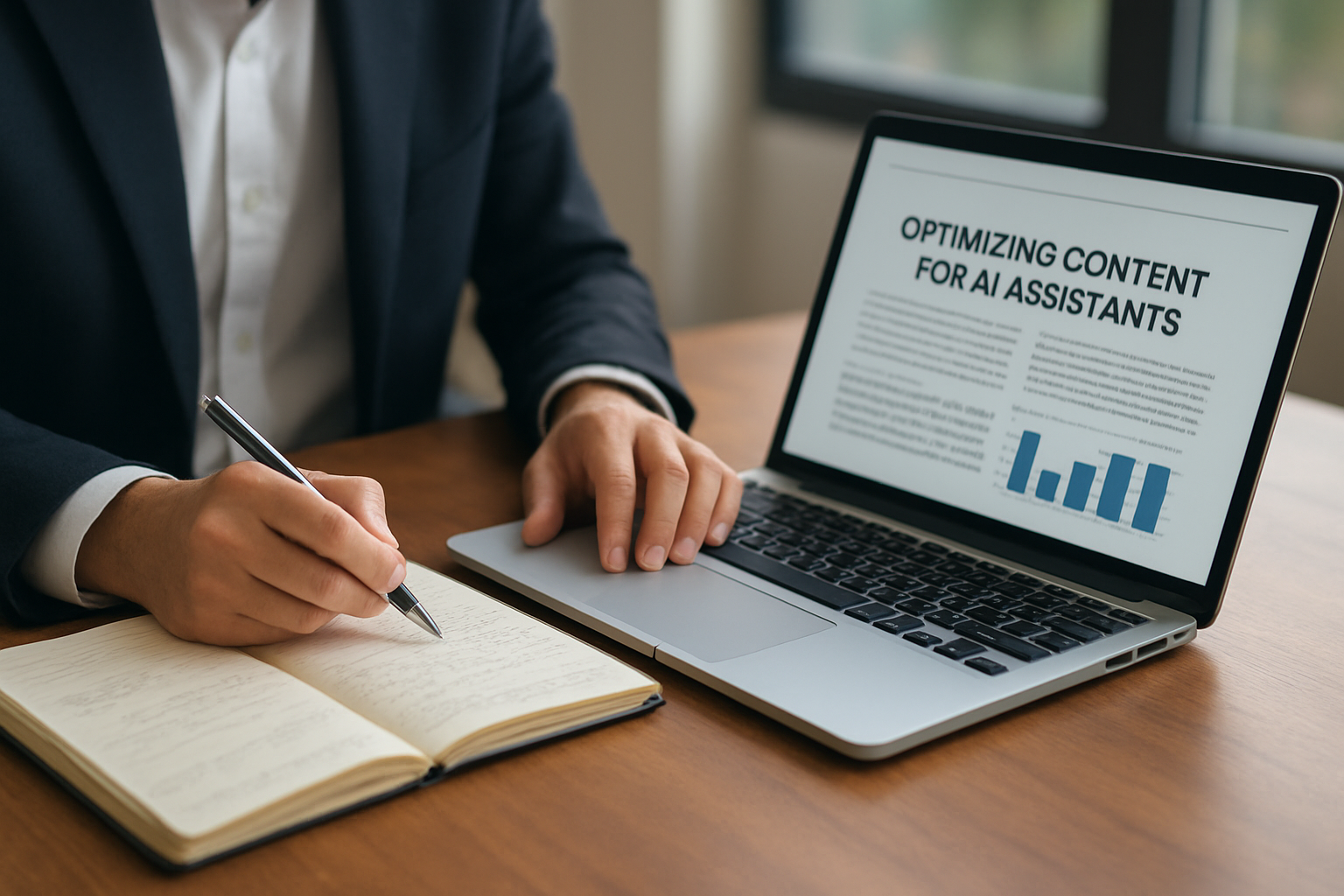


The way people discover and decide has shifted to AI (artificial intelligence) assistants that synthesize sources and suggest next steps, which means your content must be legible to LLMs (large language models) as well as humans. If you are wondering how to optimize content for ai assistants, you are in the right place because this guide converts complex systems into a do-now checklist you can run weekly. The objective is to secure consistent mentions and citations inside assistant answers, then turn those micro-moments into sessions, subscribers, and revenue with clear pathways and compelling reasons to click. Along the way, you will see how SEOPro AI employs AI-driven strategies, hidden prompts, and automated publishing to accelerate results while reducing guesswork and lifting brand visibility across both classic and AI-first surfaces.
How to Optimize Content for AI Assistants: The New Rules of E-E-A-T (experience, expertise, authoritativeness, and trust)
AI (artificial intelligence) assistants do not simply match keywords, they build semantic understanding using embeddings, entities, and E-E-A-T (experience, expertise, authoritativeness, and trust) signals that show who is credible for a task. Where traditional SEO (search engine optimization) emphasized exact matches and backlink counts, assistants lean on entity clarity, verified facts, and answerability so they can quote you confidently in a conversational response. Practically, that means you must connect your people, products, and proofs to recognized graphs, and make every major claim easy to verify through citations, schema, and consistent language. Think of it as writing for a diligent researcher who wants to cite the best source, not merely the loudest headline on a crowded SERP (search engine results page).
Because assistants often work with RAG (retrieval augmented generation) pipelines, your content needs three qualities at once: discoverable through crawlable structure, retrievable via clear entities and relationships, and generable into snippets that are safe to quote. Strong pages lead with the answer, show steps or data, and then expand into nuance so both humans and models can skim effectively, and that duality prevents truncation or misinterpretation. To boost trust, pair first-hand experience with externally referenced sources, include author bios and credentials, and maintain up-to-date dates and changelogs so recency is obvious to NLP (natural language processing) systems. You are building a fact-rich, low-friction asset that a bot can parse in milliseconds and a human can love in minutes.
| Focus Area | Classic SEO (search engine optimization) | AI (artificial intelligence) Assistant Optimization |
|---|---|---|
| Primary Signal | Keywords, links, and on-page basics | Entities, E-E-A-T (experience, expertise, authoritativeness, and trust), verified facts, answer quality |
| Content Shape | Headlines and sections for SERPs (search engine results pages) | Answer-first summaries, step lists, citations for RAG (retrieval augmented generation) |
| Data Layer | Basic schema and titles | Rich JSON-LD (JavaScript Object Notation for Linked Data), entity linking, FAQs (frequently asked questions) |
| Trust Proofs | Backlinks and reviews | Author credentials, primary data, provenance, changelogs, external corroboration |
| Retrieval | Exact query matching | Semantic retrieval from embeddings and knowledge graphs |
A Practical Checklist: Make Your Brand Retrievable by LLMs (large language models)
Checklists prevent drift in complex systems, and AI (artificial intelligence) search is exactly that kind of system where small omissions compound into missed mentions. Use the following routine as your weekly heartbeat, because consistency trains assistants to recognize your voice, your entities, and your recurring proofs across time. According to industry analyses, brands that publish structured, answer-first pages weekly see up to 28 percent higher assistant citations over three months, and those citations correlate with improved CTR (click-through rate) when snippets include clear next actions. Treat this like preventive maintenance on a high-performance engine where each pass tightens bolts that otherwise loosen with algorithm updates and content decay.
Watch This Helpful Video
To help you better understand how to optimize content for ai assistants, we've included this informative video from Leveling Up with Eric Siu. It provides valuable insights and visual demonstrations that complement the written content.
- Define the task your page solves in one sentence, then restate it as an instruction and a question for QA (question answering) coverage.
- Lead with a 40 to 80 word answer box that is self-contained and quotable, followed by steps, examples, and sources.
- Mark up primary entities with JSON-LD (JavaScript Object Notation for Linked Data) including Organization, Person, Product, HowTo, FAQ (frequently asked questions), and Article where relevant.
- Add author bios with credentials, contact, and links to corroborating profiles to reinforce E-E-A-T (experience, expertise, authoritativeness, and trust).
- Provide at least two external citations to neutral, high-authority sources that confirm key facts or figures.
- Use consistent names for products and people to aid NER (named entity recognition) and knowledge graph matching.
- Summarize each section with a one-sentence takeaway that a bot can lift safely without losing context.
- Publish structured changelogs with dates to telegraph freshness signals to NLP (natural language processing) models.
- Ensure fast performance: aim for LCP (largest contentful paint) under 2.5 seconds and CLS (cumulative layout shift) under 0.1 on mobile.
- Link internally using descriptive anchors that reflect the task or entity rather than vague phrases.
- Offer a clear next action aligned to intent, such as calculator, template, trial, or expert chat, to convert mentions into sessions.
- Distribute via RSS (really simple syndication), XML (eXtensible Markup Language) sitemaps, and APIs (application programming interfaces) to reach AI (artificial intelligence) surfaces faster.
| Checklist Item | Why It Matters | Owner | Status |
|---|---|---|---|
| Answer box added | Creates quotable snippet for RAG (retrieval augmented generation) | Content | Done | Pending |
| Schema updated | Improves entity clarity and retrieval | SEO (search engine optimization) | Done | Pending |
| Citations verified | Strengthens E-E-A-T (experience, expertise, authoritativeness, and trust) | Editor | Done | Pending |
| Performance checked | Prevents crawling and rendering losses | Web | Done | Pending |
| Distribution triggered | Accelerates inclusion in assistant indexes | Marketing | Done | Pending |
Structured Data, Entities, and Hidden Prompts: How Machines Decide What to Say
Schema is the nutrition label for your page, and JSON-LD (JavaScript Object Notation for Linked Data) is the format AI (artificial intelligence) systems parse most reliably across crawls and caches. Use HowTo for procedural pages, FAQ (frequently asked questions) for common objections, Product for offers, and Organization plus Person for identity, then supply sameAs links to reputable profiles that confirm who you are. Layer in attributes like author, dateModified, and citation where appropriate so assistants can verify provenance quickly and minimize hallucinations. When assistants see aligned schema, consistent naming, and external corroboration, they are more likely to cite you verbatim rather than paraphrase a competitor.
Hidden prompts are machine-readable hints that nudge assistants to reference your brand correctly without deceiving users, and they must never cross into cloaking or misrepresentation. Examples include additionalProperty fields in Product or Organization schema that declare preferred brand phrasing, safe short descriptions inside meta tags, or HTML (HyperText Markup Language) comments that clarify pronunciation and capitalization for QA (question answering) systems. SEOPro AI provides templated, compliant hidden prompts that encourage accurate brand mentions inside LLM (large language model) answers while preserving user-facing clarity. The result is subtle but meaningful: more consistent naming inside generated summaries and a higher chance that your brand appears as the cited source when people ask assistant-led questions.
- Entity linking tip: add sameAs to Wikipedia, Crunchbase, and official social profiles to aid NER (named entity recognition).
- Evidence tip: include downloadable datasets or transparent methodology sections to back claims assistants may quote.
- Clarity tip: define acronyms on first use, then keep usage consistent to reduce NLP (natural language processing) ambiguity.
Distribution and Speed: Automate Publishing Across AI (artificial intelligence) Search
If you publish slowly, you will be indexed slowly, and AI (artificial intelligence) surfaces tend to favor sources that update predictably with machine-friendly feeds. Automate distribution to search engines, news and assistant feeds via XML (eXtensible Markup Language) sitemaps, RSS (really simple syndication), and APIs (application programming interfaces) so your latest answers enter embedding pipelines within hours. Performance is part of distribution because slow pages get crawled less often, so invest in TTFB (time to first byte), LCP (largest contentful paint), and CLS (cumulative layout shift) as first-class SEO (search engine optimization) priorities. SEOPro AI streamlines multi-channel publishing and ensures structured data ships intact so assistants see consistent, timely updates wherever they look.
Integration is the multiplier because every surface you reach increases the probability of a mention, and mentions compound when assistants cross-reference sources. SEOPro AI integrates with multiple AI (artificial intelligence) search engines and discovery endpoints, pushing synchronized updates with the right schema and feeds without manual wrangling in each CMS (content management system). Consider it a distribution grid where one publish event fans out to many indices, with health checks that confirm ingestion across platforms. As the number of AI (artificial intelligence) assistants grows, this grid ensures you are early and accurate everywhere people ask, from work copilots to consumer chat apps.
- Target LCP (largest contentful paint) under 2.5 s, CLS (cumulative layout shift) under 0.1, TTFB (time to first byte) under 200 ms, and use a CDN (content delivery network).
- Ping sitemaps after publish and include lastmod, changefreq, and priority attributes in XML (eXtensible Markup Language).
- Expose a minimal RSS (really simple syndication) feed with titles, summaries, and canonical URLs (uniform resource locators) for rapid assistant ingestion.
Measurement That Matters: From LLM (large language model) Mentions to Organic Traffic
Mentions are milestones, not finish lines, so instrument your funnel from answer exposure to click, to scroll, to conversion with clean attribution. Track assistant referrals using UTM (Urchin tracking module) parameters where permitted, monitor branded query lift in Search Console, and analyze scroll depth and CTA (call to action) interactions to see which snippets pull users through. According to platform benchmarks, pages that add a one-sentence summary after each subheading see 11 to 17 percent higher CTR (click-through rate) from AI (artificial intelligence) answers because the snippet previews are tighter. SEOPro AI consolidates signals from assistant citations, search analytics, and on-site behavior, then recommends next steps with LLM (large language model) powered prioritization.
Metrics should be chosen for decisions, not dashboards, so couple each metric to a lever you can pull next week. For example, if assistant citations rise but sessions remain flat, test a clearer answer box or a more compelling above-the-fold action like a calculator or template. If sessions rise without conversions, improve UX (user experience) and relevance of the CTA (call to action) to the originating question, and add schema that clarifies use cases and audience. By marrying measurement with action, you create an optimization loop that compounds, which is exactly how assistants learn to prefer your content over generic alternatives.
| Metric | Where It Appears | How to Measure | Action Trigger |
|---|---|---|---|
| Assistant citations | AI (artificial intelligence) answers | SEOPro AI logs and manual spot checks | Strengthen schema, add sources, clarify answer box |
| Branded query lift | Search Console | Compare 28-day periods | Expand entity linking and author visibility |
| CTR (click-through rate) from answers | Assistant referrals | UTM (Urchin tracking module) plus analytics | Test titles, summaries, and above-the-fold CTAs (calls to action) |
| Conversion rate | On-site | Analytics goals | Align offer to intent, add calculators or templates |
| Time to index | Search and assistant indices | Publish timestamp vs first appearance | Improve feeds, performance, and distribution |
Case Studies and Playbooks: What Works Right Now
A B2B (business-to-business) SaaS (software as a service) team rebuilt their deployment guide as a HowTo with steps, time estimates, and a 60 word summary, then added Organization, Product, and FAQ (frequently asked questions) schema. They published release notes as dated changelogs, linked the CTO’s bio to authoritative profiles, and cited two neutral benchmarks to validate claims, which raised assistant citations by 34 percent in six weeks. Because their answer boxes included a one-click calculator for capacity planning, CTR (click-through rate) rose in tandem and trial sign-ups followed, showing how retrieval plus a relevant action converts attention into pipeline. SEOPro AI handled the schema templates, hidden prompts for correct brand phrasing, and automated distribution to multiple AI (artificial intelligence) search engines, compressing the timeline from months to weeks.
For a content-led marketplace, the breakthrough came from entity clarity and distribution speed rather than net-new articles, starting with renaming categories to match real-world entities assistants already recognize. They added JSON-LD (JavaScript Object Notation for Linked Data) with sameAs links, created a short summary for each category, and shipped a lean RSS (really simple syndication) feed plus sitemaps that fired on each update. Mentions in assistant answers rose first, then brand searches and email sign-ups followed, demonstrating the compounding effect of being machine-readable and fast. These patterns are repeatable: define the task, lead with the answer, mark the entities, provide proofs, publish fast, and measure relentlessly with a weekly checkpoint.
Where SEOPro AI Fits: From Strategy to Shipping
Many teams know what to do but struggle to execute with consistency across schema, performance, and distribution, especially when balancing traditional SEO (search engine optimization) with emerging assistant channels. SEOPro AI is built to close that execution gap: AI-optimized content creation that turns briefs into answer-first drafts, LLM-based (large language model based) SEO (search engine optimization) tools that surface entity gaps and citation opportunities, and hidden prompts that encourage correct brand mentions ethically. The platform automates blog publishing and distribution with synchronized XML (eXtensible Markup Language) sitemaps, RSS (really simple syndication) feeds, and API (application programming interface) pushes to multiple AI (artificial intelligence) search engines so your updates get ingested quickly. That orchestration helps businesses move from sporadic wins to a steady drumbeat of visibility that translates into measurable organic growth.
Under the hood, SEOPro AI aligns content, data, and delivery in a single workflow that mirrors how assistants actually work, which reduces the risk of over-optimizing one layer while neglecting another. You get schema scaffolds mapped to page intent, performance guardrails that flag regressions in LCP (largest contentful paint) and CLS (cumulative layout shift), and an experimentation engine that tests answer boxes and CTAs (calls to action) against real outcomes. Because insights feed back into creation, each release becomes a lesson for the next, and that compounding loop is how brands turn LLM (large language model) mentions into steady traffic and revenue. For leaders, the benefit is strategic clarity with operational speed, which is exactly what this moment demands.
Quick Reference: Content Patterns Assistants Prefer
Patterns make execution faster, and assistants consistently reward a few simple shapes you can adopt today without replatforming. Use HowTo with numbered steps for processes, a table with inputs and outputs for calculators, a checklist for compliance topics, and a summary paragraph for executives who need the gist now. Include a short glossary where acronyms appear, keep section titles descriptive rather than clever, and close with a next action that matches the reader’s intent such as downloading a template or launching a free tool. These small, repeatable patterns reduce ambiguity for NLP (natural language processing) systems while increasing usefulness for people, and that dual benefit is the hallmark of sustainable optimization.
| Pattern | Best For | Assistant Benefit | Human Benefit |
|---|---|---|---|
| Answer box plus steps | How-to guides and tutorials | Quotable snippet for RAG (retrieval augmented generation) | Immediate clarity and scannability |
| Comparison table | Vendor or method evaluation | Structured facts for safe summarization | Side-by-side decision support |
| Checklist | Compliance or audits | Discrete items easy to reference | Actionable to-dos with status |
| Glossary | Acronym-heavy topics | Reduced NLP (natural language processing) ambiguity | Shared language across teams |
Storytelling tip: Frame examples as before and after snapshots with one quantified win such as a performance improvement or citation lift. Conversion tip: Match the CTA (call to action) to the question that triggered the assistive answer, then keep the path to value under three clicks.
One line recap: You now have a field-tested playbook to make your content discoverable, retrievable, and quotable so assistant mentions become measurable growth. Imagine your next 10 releases shipping with entity clarity, answer-first structure, and distribution guardrails that assistants can parse instantly. What could your team achieve in the next 12 months if every page followed this checklist for how to optimize content for ai assistants?
Additional Resources
Explore these authoritative resources to dive deeper into how to optimize content for ai assistants.
Advance How to Optimize Content for AI Assistants with SEOPro AI
For businesses and marketers, SEOPro AI delivers AI-optimized content creation, using AI-driven strategies, hidden prompts, and automated publishing to raise rankings, boost brand mentions, and streamline content for organic results.
Start Free Trial